
About Indonesian
Forest Giants
Forest Giants — Raksasa Hutan — are the monumental hardwood trees that define the vertical structure of Indonesia's primary tropical rainforests. Rising far above the main canopy, these emergent titans represent some of the most ecologically and economically significant woody plants in all of Southeast Asia.
Across Indonesia's vast archipelago, from the peat swamp forests of Sumatra and the dipterocarp lowlands of Kalimantan to the montane rainforests of Papua, Forest Giants form the ecological backbone of primary forest systems. Their massive trunks — often buttressed, their canopies spreading tens of metres wide — create structural complexity that supports extraordinary biodiversity, regulates microclimates, and anchors forest carbon stocks that are irreplaceable on human timescales.
"A single giant tree may harbour hundreds of epiphyte species, provide nesting sites for hornbills and eagles, sustain insect communities of thousands of species, and lock away carbon for centuries — it is not merely a tree, but an ecosystem in itself."
— Adapted from CIFOR tropical forest research literatureMany of Indonesia's Forest Giants belong to the Dipterocarpaceae family — among the most commercially valuable and ecologically dominant tree families in tropical Asia. Others represent ancient lineages within families such as Fabaceae, Lauraceae, Myristicaceae, and Taxaceae. Together these species shape the forest architecture that millions of plant and animal species depend upon, and they underpin the livelihoods of communities throughout the Indonesian archipelago.
Giant Hardwood Trees
Forest Giants are characterised by their immense stature — mature specimens commonly exceed 40 metres and may surpass 60 metres in primary lowland forest. Their exceptionally dense, durable heartwood has been prized for millennia in shipbuilding, construction, and fine furniture. Long-lived species such as Ulin (Eusideroxylon zwageri) can survive for over 1,000 years, accumulating irreplaceable structural complexity that secondary forest can never replicate.
Ecosystem Engineers
As emergent canopy species, Forest Giants regulate light penetration, modify local temperature and humidity, and create habitat heterogeneity across multiple forest strata. Their vast root systems stabilise soils and regulate watershed hydrology. Each giant tree sequesters tonnes of carbon throughout its lifetime, making these species critical components of Indonesia's climate commitments and international carbon accounting frameworks.
Conservation Challenges
Indonesia has lost more primary forest than almost any other nation over the past four decades. Forest Giants are disproportionately targeted by selective logging due to their exceptional timber value, and their slow regeneration rates mean that logged populations may require centuries to recover — if they recover at all. Threats include deforestation for palm oil and pulpwood plantations, illegal logging, habitat fragmentation from roads and mining concessions, forest fire driven by land-clearing, and the cumulative long-term effects of climate change on rainfall patterns and phenology. Several species are now restricted to tiny remnant populations in protected areas.
This archive documents 18 Forest Giant species found across Indonesia's major island groups — from the widely distributed commercial giants to little-known endemic species of Maluku and Papua. Each entry draws on data from KLHK, the IUCN Red List, CIFOR field research, and botanical survey publications to provide a comprehensive ecological and conservation profile.
Forest Giants act as ecological pillars of tropical rainforests. Their disappearance would affect biodiversity, water cycles, carbon storage, and forest stability across entire ecosystems. The loss of a single mature giant tree may eliminate microhabitats for hundreds of dependent species, remove decades of stored carbon from the landscape, and destabilise the canopy structure that regulates the forest climate below. Protecting these species is not merely a matter of botanical conservation — it is fundamental to the ecological integrity of Indonesia's forests and the wellbeing of the communities that depend on them.
Forest Giants
Database
A complete record of 18 Forest Giant species found across Indonesia's primary rainforests — searchable, filterable, and expandable with detailed ecological and conservation data.
Habitat &
Distribution
Indonesia's Forest Giants are distributed across the archipelago's six major island groups, each with distinct forest types, substrates, and climatic conditions that shape which giant species dominate the canopy.
The distribution of Forest Giants across Indonesia is shaped by geology, soil chemistry, rainfall seasonality, and elevation. Lowland dipterocarp forests on deep alluvial or podzolic soils support the tallest trees; peat swamp forests of coastal Sumatra and Kalimantan harbour waterlogged specialists; montane forests above 1,000 metres are dominated by different families entirely, with denser, shorter-statured trees adapted to cooler, cloud-saturated conditions. Many species are restricted to one island group or even a single mountain range, making them acutely vulnerable to localised deforestation.
Sumatra's lowland dipterocarp and peat swamp forests host major commercial giants including Damar species and Ulin, alongside hill forest Palahlar species along the Barisan Range.
Borneo's vast primary forests are among the most species-rich on Earth. Kalimantan hosts iconic giants including Ulin, Kempas species, and Bindang in lowland and hill dipterocarp zones.
Java retains Forest Giants only in isolated protected areas. Endemic species such as Resak Jawa and Saninten persist in montane forests on the southern slopes of Java's volcanic chain.
Sulawesi's complex geological history has produced forests with unusual floristic compositions. Taksus and Gaharu Buaya represent Sulawesi's distinctive giant tree component in highland and lowland systems.
The Maluku islands are home to Kayu Besi Maluku and Wanga, species of limited distribution but exceptional ecological and cultural value to island communities across the archipelago.
Papua's extensively forested lowland plains and montane systems represent the largest remaining intact tropical forest block in the Asia-Pacific. Dungun Besar occupies lowland riverine and coastal forest zones.
The rapid contraction of lowland dipterocarp forest — historically the most species-rich forest type and the prime habitat for many Forest Giants — represents the most acute distribution threat. In Sumatra and Kalimantan, lowland forest below 300 metres has been reduced to fragments, with surviving giant trees often isolated as scattered individuals in a matrix of plantation and secondary growth, unable to reproduce successfully due to the absence of appropriate pollinators and seed dispersers.
Conservation
Status Overview
Of the 18 Forest Giant species documented in this archive, the majority face elevated threat levels driven by decades of intensive selective logging, habitat conversion, and the slow regeneration rates inherent to large, long-lived canopy trees.
Primary Threats
-
🌳
Illegal LoggingDespite national and international protection, many Forest Giants remain targets for illegal selective logging due to the exceptional value of their timber. Ulin, Kempas, and Kayu Besi species can fetch prices ten to fifty times higher than plantation timber, creating strong economic incentives for poaching even within formally protected areas. Enforcement is severely constrained across Indonesia's vast and remote forest estate.
-
🏗
Habitat ConversionThe conversion of primary forest to oil palm, pulpwood, and smallholder agriculture has eliminated millions of hectares of giant tree habitat since 1970. Lowland forests — the primary habitat for most Forest Giants — have experienced the most severe losses, with Sumatra and Kalimantan losing over half their original lowland forest extent. Agricultural conversion is typically irreversible on human timescales.
-
⛏
Mining ActivitiesIndonesia's mineral wealth — coal, nickel, gold, and bauxite — frequently overlaps with primary forest habitat. Mining concessions legally authorise forest clearance within their operational boundaries, and the road networks created for resource extraction open previously inaccessible forest to illegal loggers and land encroachment. Sulawesi's nickel mining expansion poses particular risks to forest giant habitats on that island.
-
🔥
Forest FiresDeliberately lit fires for land clearing, combined with El Niño-driven drought conditions, cause catastrophic destruction of primary forest across Sumatra and Kalimantan. Peat fires in particular are extremely difficult to extinguish and can smoulder for months, destroying the substrate and root systems of giant trees. The 2015 fire season alone destroyed over two million hectares of peat and forest across Indonesia.
-
🌡
Climate ChangeAltered rainfall seasonality, more intense and frequent drought events, and rising temperatures are beginning to affect the phenology, reproductive success, and regeneration of Forest Giants. Dipterocarp mast fruiting — the synchronised mass fruiting events that underpin forest giant regeneration — is driven by ENSO climate cycles, and disruption to these cycles may compromise recruitment over coming decades.
-
🛣
Infrastructure ExpansionRoad construction into previously unlogged forest is a primary driver of deforestation — new roads reduce the cost of extraction and attract settlement. Indonesia's trans-Papua highway and various provincial road projects are opening vast tracts of intact primary forest to logging, agricultural encroachment, and hunting pressure for the first time, placing previously undisturbed giant tree populations at immediate risk.
Ecological
Importance
Forest Giants are far more than impressive botanical specimens. They provide indispensable, measurable ecosystem services that underpin the functioning of entire rainforest systems across Indonesia.
Carbon Storage
Large emergent trees store disproportionate amounts of carbon relative to their number. Individuals exceeding 70cm diameter at breast height can store over 20 tonnes of above-ground biomass carbon each. The loss of Forest Giants from selectively logged landscapes can reduce stand-level carbon stocks by 40–70%, contributing directly to Indonesia's greenhouse gas emissions and compromising national climate targets.
Watershed Protection
The extensive root systems of Forest Giants regulate water infiltration, reduce surface runoff, and maintain dry-season stream flows that millions of Indonesians depend upon. Their canopies intercept rainfall, reducing soil erosion and sediment loading in rivers. Deforestation of giant tree populations from watershed catchments is consistently associated with increased flood peaks, reduced base flows, and elevated downstream turbidity.
Wildlife Habitat
Emergent giant trees are used as nesting and roosting sites by hornbills, eagles, proboscis monkeys, orangutans, and flying squirrels. Their hollow trunks shelter bats, civets, and small felids. The structural complexity created by the buttressed roots, deep bark fissures, and dead wood of old giant trees provides irreplaceable microhabitats found nowhere else in the forest. Their loss cascades through dependent wildlife communities within decades.
Biodiversity Support
A single mature Forest Giant can support hundreds of epiphytic orchids, ferns, and bryophytes on its trunk and branches, together with thousands of invertebrate species in its bark, deadwood, and litter zone. The fruiting events of giant dipterocarps sustain large mammal populations — sun bears, pigs, and deer — across the forest, and the seeds of many giant species are dispersed exclusively by large-bodied frugivores now absent from degraded forests.
Climate Regulation
Forest Giants play a central role in regional climate regulation through evapotranspiration. The Amazon and Southeast Asian tropical forests function as biotic pumps, recycling oceanic moisture inland through the tree canopy. Loss of emergent trees reduces evapotranspiration, lowering rainfall and increasing temperatures at regional scales — a feedback loop that accelerates further forest degradation and threatens agriculture in surrounding areas.
Forest Regeneration
Forest Giants are the seed sources for the next generation of forest. Their mass fruiting events — particularly the synchronised mast fruiting of dipterocarp species — saturate seed predators, ensuring that a proportion of seeds escape predation and establish. Isolated remnant trees outside forest may fruit but rarely regenerate successfully, as seed dispersers avoid open areas. Maintaining connected forest is therefore essential for the long-term regeneration of giant tree populations.
Ulin: The Ironwood Keystone of Kalimantan
Eusideroxylon zwageri — Ulin, or Borneo ironwood — is among the most ecologically and culturally significant Forest Giants of Kalimantan. Its wood is legendary: denser than water, resistant to insects and fungi, it has been used for roof shingles, pilings, and house posts for over a thousand years by Dayak communities. In the forest, Ulin trees may live for centuries, their massive root systems stabilising riverbanks and their canopies providing nesting platforms for Helmeted Hornbills and Malaysian Sun Bears. Selective logging has reduced Ulin populations by over 80% across its range. Studies confirm that forests without Ulin show measurably reduced structural complexity, lower mammal diversity, and accelerated soil erosion in riparian zones.
Forest Giants
Gallery
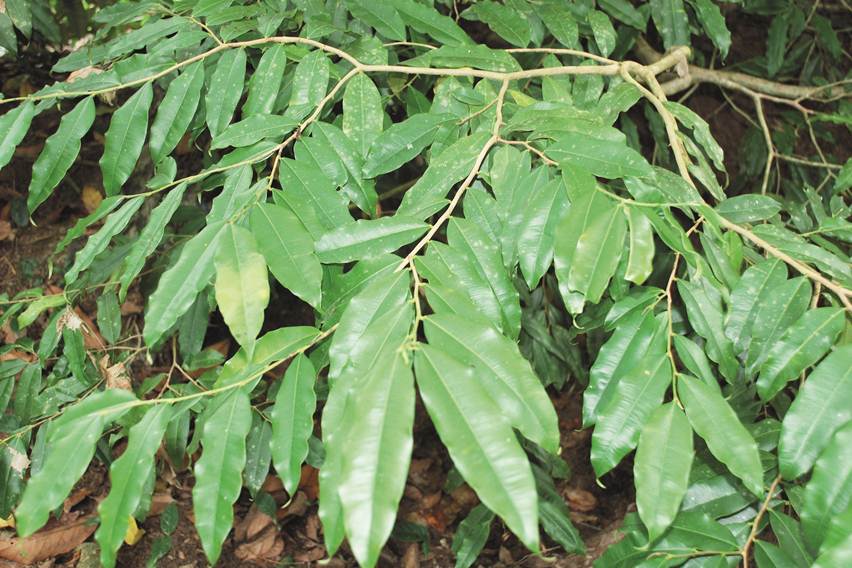
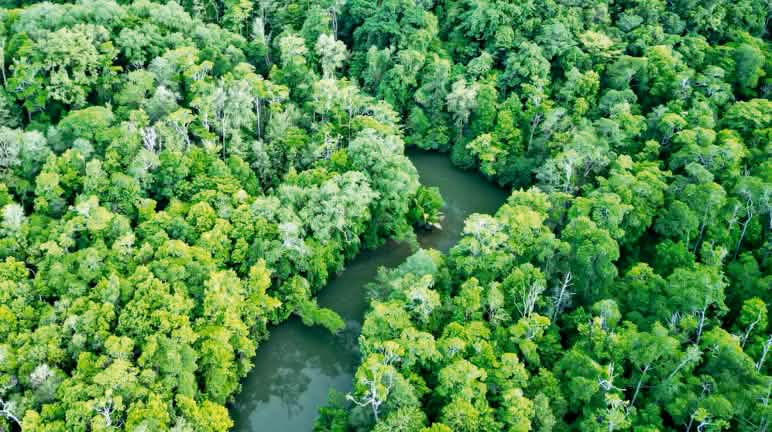
A visual survey of Indonesia's Forest Giants — from ancient ironwood trunks rising from Kalimantan riverbanks to the cloud-wrapped canopies of Papua's montane primary forests.



References &
Further Reading
This archive draws on primary conservation databases, Indonesian government documentation, and leading tropical forestry research institutions. All species data should be verified against current IUCN assessments and KLHK records.
- KLHK — Kementerian Lingkungan Hidup dan Kehutanan — Ministry of Environment and Forestry of Indonesia. Flora and fauna protection registers, concession data, and national forest monitoring reports. menlhk.go.id
- IUCN Red List of Threatened Species — Assessments for Indonesian tree species including Dipterocarpaceae, Lauraceae, Myristicaceae, and Taxaceae families. International Union for Conservation of Nature. iucnredlist.org
- Forest Research and Development Agency (FORDA / BPK) — Badan Penelitian dan Pengembangan Kehutanan. Indonesian government research body for forestry science, species ecology, and silvicultural studies. Jakarta: Kementerian Lingkungan Hidup dan Kehutanan.
- CIFOR — Center for International Forestry Research — Research publications on tropical forest giants, carbon stocks, forest governance, and conservation in Indonesia and Southeast Asia. cifor.org
- FAO Forestry Reports — Global Forest Resources Assessment and State of the World's Forests series. Food and Agriculture Organization of the United Nations. fao.org/forestry
- Botanical Survey Publications — Herbarium Bogoriense — Flora of Java, Flora Malesiana volumes, and specialist monographs on Indonesian tree flora. Bogor: Pusat Penelitian Biologi – LIPI (now BRIN).
- Symington, C.F. (revised Ashton, P.S.) (2004) — Foresters' Manual of Dipterocarps. Malaysia Forest Records No. 16. Kuala Lumpur: Forest Research Institute Malaysia.
- Whitmore, T.C. (1984) — Tropical Rain Forests of the Far East, 2nd ed. Oxford: Clarendon Press.
- Ashton, P.S. (2014) — On the Forests of Tropical Asia: Lest the Memory Fade. Kew Publishing, Royal Botanic Gardens, Kew.
- GBIF — Global Biodiversity Information Facility — Occurrence records and herbarium specimen data for Indonesian forest tree species. gbif.org