About Indonesia's
Giant Flowers
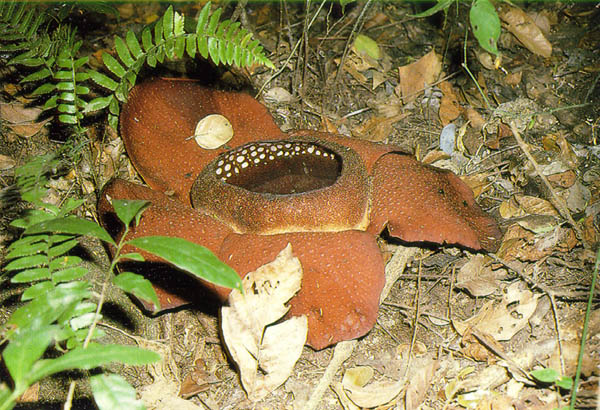
Indonesia is home to some of the largest and most remarkable flowers on Earth. From the parasitic Rafflesia species with blooms reaching over one metre in diameter to the towering corpse flower that produces the world's largest unbranched inflorescence, these botanical wonders represent some of the country's most extraordinary natural treasures.
Indonesia's giant flowers are primarily represented by two distinct botanical groups. The first is the genus Rafflesia and its relatives — holoparasitic flowering plants that spend nearly their entire life cycle as threads within the tissue of host vines in the genus Tetrastigma, only becoming visible to the outside world when they produce their enormous, fleshy blooms. The second is Amorphophallus titanum, the Titan Arum or Corpse Flower, which is not a single flower but the world's largest unbranched inflorescence, capable of reaching three metres in height and producing a staggering quantity of heat and odour during its brief flowering period.
"These flowers do not ask to be admired — they demand it. In size, in stench, in rarity, they are among the most audacious biological productions on Earth."
— Adapted from conservation botanical literatureBoth groups are biologically unique in profound ways. Rafflesia has no roots, no stem, no leaves — it is essentially a flower and nothing more, lacking chlorophyll and entirely dependent on its host for water and nutrients. Amorphophallus titanum similarly invests years of energy into its underground corm before producing a single, spectacular reproductive event that lasts only 24 to 48 hours. Many species in both groups are strict endemics — found only in specific rainforest patches in Indonesia, on no other part of Earth.
Largest Floral Structures
Rafflesia arnoldii produces the largest individual flower of any plant species, with blooms regularly exceeding 90 cm in diameter and weighing up to 11 kg. Amorphophallus titanum holds the record for the world's largest unbranched inflorescence, a towering spadix that can reach three metres. Together, these species redefine what is physically possible for a flowering plant.
Extreme Botanical Adaptations
Rafflesia species represent the most extreme example of parasitic lifestyle in the plant kingdom — they have dispensed with photosynthesis, roots, stems, and leaves entirely. Reproduction is equally extreme: pollen must travel between male and female flowers that may be kilometres apart and bloom only briefly, carried by carrion flies attracted by the flower's odour of rotting flesh.
Conservation Challenges
Despite their global fame, Indonesia's giant flowers face mounting existential threats. Habitat loss from deforestation, agricultural expansion, and logging destroys both the flowers and their obligate host plants. Forest fragmentation isolates populations, reducing the already-slim chances of successful pollination. Climate change disrupts the seasonal cues that coordinate flowering. And the very rarity and spectacle that makes these flowers iconic also makes them targets for unregulated tourism disturbance, with visitors trampling surrounding vegetation and sometimes harvesting buds before they open.
The Indonesian Ministry of Environment and Forestry (KLHK) and BRIN (National Research and Innovation Agency) have designated key giant flower species as conservation priorities. Yet enforcement remains challenging across the archipelago's vast and often remote rainforest estate. International scientific collaboration, community-based monitoring, and rigorous documentation are the pillars on which their survival ultimately depends.
These species serve as flagship organisms for rainforest conservation and are among the most iconic symbols of Indonesia's biodiversity. As indicators of intact tropical forest, their presence confirms the health of entire ecosystems. Their loss would represent not merely the extinction of remarkable plants, but the collapse of the specialised ecological relationships — with host vines, pollinators, and forest communities — that sustain them.
This archive documents all 14 notable giant flower species with scientific rigour and the reverence they deserve — drawing on IUCN assessments, Kew Gardens records, BRIN research, and primary taxonomic literature. It is a living document, intended to grow as new field observations emerge and taxonomic understanding evolves.
All 14 Giant
Flower Species
A complete archive of Indonesia's most remarkable giant flowers, including Rafflesia species and the giant corpse flower — searchable, filterable, and expandable with detailed ecological and conservation data.
Habitat &
Distribution
Indonesia's giant flowers are not evenly distributed — each species is tied to specific forest types, host plant populations, and geographic ranges. Their distribution reflects both the geological complexity of the archipelago and the extreme ecological specificity of their life strategies.
Rafflesia species are found exclusively in tropical rainforests where their host vines — species of Tetrastigma — are present. They favour humid lowland and submontane forests, typically below 1,000 metres, where the host vines form dense tangles across the forest floor. Amorphophallus titanum is native to the limestone hills and tropical rainforests of Sumatra, where its massive underground corm survives for decades between flowering events. Both groups are entirely dependent on intact forest canopy: even partial deforestation eliminates their habitat irreversibly.
Sumatra harbours the greatest diversity of giant flowers, including R. arnoldii, R. gadutensis, and the iconic Amorphophallus titanum. The Barisan mountain range and its surrounding lowland forests are the heartland of Indonesian giant flower diversity.
Java hosts Rafflesia patma and R. zollingeriana, endemic to its western and central forests. Java's heavily deforested landscape makes surviving populations in protected reserves critically important for species persistence.
Kalimantan (Borneo) supports several Rafflesia species, including R. pricei and R. tengku-adlinii. Its vast tropical rainforests represent some of the most important remaining habitat for giant flower conservation in Southeast Asia.
Sulawesi harbours scattered records of Rafflesia and related parasitic plants. Its complex geology and diverse forest types provide suitable ecosystems, though surveys remain incomplete and further species may await formal documentation.
Climate change poses an acute threat to these already-restricted habitats. Shifts in rainfall patterns alter the moisture conditions that host vines require to thrive; warming temperatures compress the suitable thermal envelopes of upland forest species. For plants with such constrained distributions and such specific ecological requirements, even modest habitat changes can push populations below viable reproductive thresholds.
Conservation
Status Overview
Indonesia's giant flowers occupy some of the most precarious conservation positions of any plant group on Earth. Their extraordinary biological specialisation — combined with small population sizes, restricted ranges, and dependence on intact tropical forest — places many species at immediate risk of extinction.
Primary Threats
-
🌳
Deforestation & Habitat LossThe conversion of tropical rainforests to oil palm plantations, rubber estates, and smallholder agriculture is the single greatest threat to Indonesia's giant flowers. Both Rafflesia and Amorphophallus titanum require intact, multi-layered rainforest — even selective logging that removes canopy trees can destroy populations by eliminating shade, increasing temperature, and drying out host vine networks. Sumatra has lost over 50% of its lowland forest since 1985.
-
🔥
Forest FiresAnnual burning of forest and peatland — whether for agricultural clearance or through escaped fires — destroys both flowering plants and their obligate host vines. Because Rafflesia and its host exist as an integrated biological unit, the death of a host vine from fire means the death of every parasitic plant associated with it. Recovery of fire-damaged populations is measured in decades, not years.
-
🛣
Habitat FragmentationRoad construction and land-use conversion fragment continuous forest into isolated patches. For Rafflesia, which requires carrion flies to transport pollen between male and female flowers that may bloom only briefly and kilometres apart, fragmentation dramatically reduces pollination success. Small, isolated populations face reproductive failure and inbreeding depression within a few generations.
-
🌡
Climate ChangeShifts in rainfall seasonality and rising temperatures alter the conditions that trigger flowering and sustain host vine networks. For species already restricted to narrow geographic and ecological niches, even modest climate shifts can push populations below viable reproductive thresholds. The synchrony between Rafflesia flowering and pollinator activity is particularly vulnerable to phenological disruption.
-
📸
Tourism DisturbanceThe spectacular and rare nature of giant flower blooms attracts large numbers of visitors. Unmanaged tourism causes trampling of host vines, compaction of forest soil, theft of buds before they open, and disturbance to pollinators. A single badly-managed bloom event can damage host vines sufficiently to prevent flowering for several years. Community-based monitoring and controlled access protocols are essential but inconsistently applied.
Ecological
Importance
Indonesia's giant flowers are far more than botanical curiosities. They occupy unique ecological positions that reflect the health and integrity of entire tropical rainforest systems.
Biodiversity Symbol
Giant flowers serve as flagship species for tropical forest conservation. Where Rafflesia blooms, intact forest with functioning host vine networks and pollinator communities must exist. Their presence is a reliable indicator of high-quality, biodiverse rainforest habitat.
Pollinator Interactions
Giant flowers are pollinated primarily by carrion flies and blow flies attracted to their odour of rotting flesh. These pollination relationships are highly specific — the flies are deceived into visiting, carrying pollen between flowers without receiving a reward. The system represents a sophisticated example of deceptive mutualism in flowering plants.
Rainforest Indicator
The presence of Rafflesia confirms the existence of both intact forest canopy and a healthy population of Tetrastigma host vines. Because the parasite depends entirely on its host, monitoring giant flower populations provides indirect data on the health of entire forest vine communities and the broader canopy ecosystem.
A Delicate Ecological Relationship
The ecological relationships sustaining Indonesia's giant flowers are among the most intricate in the plant kingdom. Rafflesia species depend entirely on their Tetrastigma host vines — entering the vine's tissue as hair-like threads of cells, extracting water and nutrients without photosynthesising, and only emerging when they produce their enormous blooms. Pollination requires blow flies to visit male and female flowers within a narrow synchronous window — flowers last only days. The Amorphophallus titanum invests years of energy in a massive underground corm before producing its brief, thermogenic inflorescence, then returns underground. This extraordinary investment of resources in a single reproductive event underscores the importance of each individual bloom surviving to set seed. Together, these relationships form a web of biological dependencies that can collapse entirely if any single element — host vine, pollinator, or intact forest microclimate — is removed.
Giant Flower
Gallery
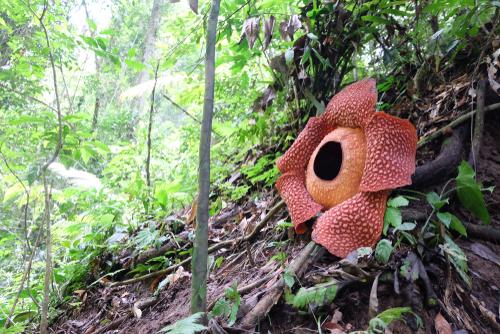
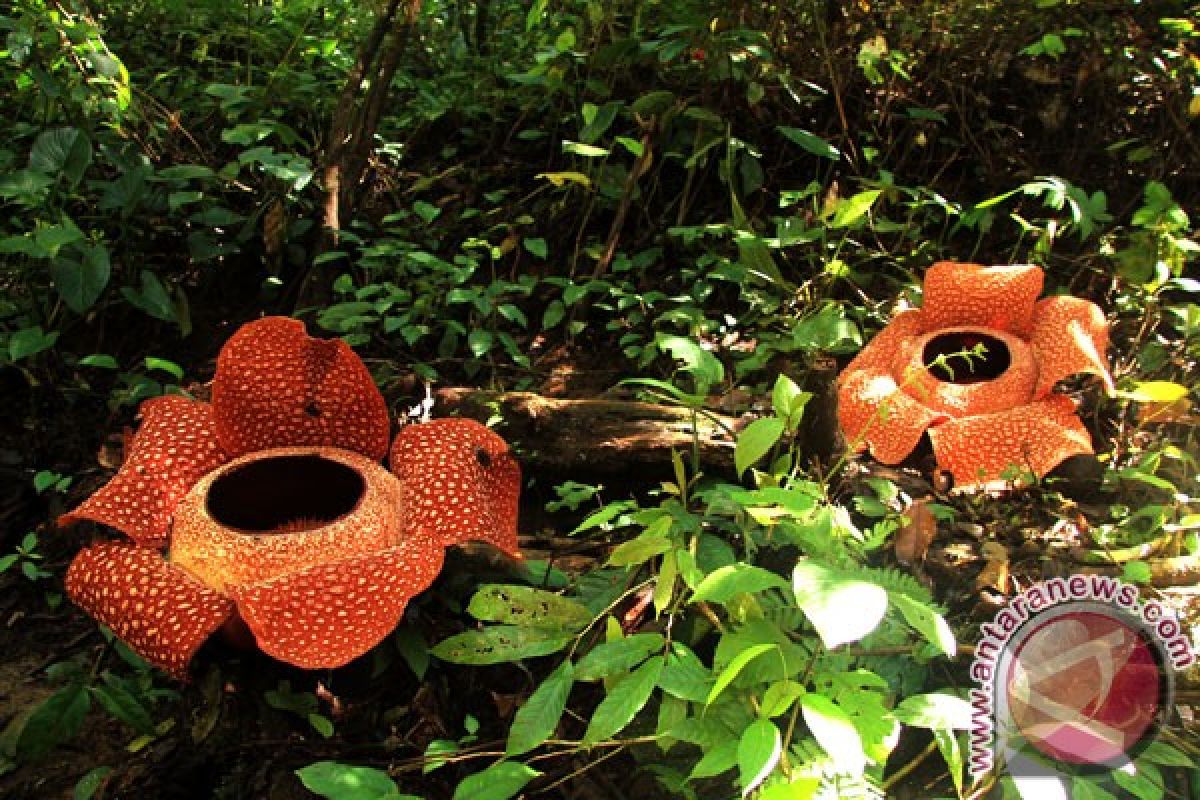
A visual survey of Indonesia's giant flower diversity — from the intricate patterning of Rafflesia blooms to the towering inflorescence of the corpse flower and the rainforest ecosystems that sustain them.



References &
Further Reading
This archive draws on primary scientific literature, international conservation databases, and Indonesian government documentation. All species data should be verified against current IUCN assessments and BRIN research outputs.
- Indonesian Ministry of Environment and Forestry (KLHK) — Government regulations and conservation status listings for protected flora species, including giant flowers. Jakarta: Kementerian Lingkungan Hidup dan Kehutanan.
- BRIN — National Research and Innovation Agency — Primary research institution for botanical documentation, field surveys, and conservation assessment of Indonesian giant flowers and endemic flora. brin.go.id
- Kew Gardens — Plants of the World Online — Taxonomic backbone and distribution data for Rafflesiaceae and Araceae (Amorphophallus). powo.science.kew.org
- IUCN Red List of Threatened Species — Rafflesia and Amorphophallus assessments (various years). International Union for Conservation of Nature. iucnredlist.org
- Flora Malesiana — Comprehensive regional flora covering the Malay Archipelago, including taxonomic treatments of Rafflesiaceae and Araceae. Naturalis Biodiversity Center, Leiden. floramalesiana.org
- Nais, J. (2001) — Rafflesia of the World. Sabah Parks, Kota Kinabalu. The definitive monograph on the genus.
- Meijer, W. (1997) — Rafflesiaceae. In: Flora Malesiana, Series I, vol. 13. Rijksherbarium, Leiden.
- Bänziger, H. (1991) — Stench and fragrance: unique pollination of Rafflesia. Natural History Bulletin of the Siam Society 39: 19–52.
- Barthlott, W. & Lobin, W. (1998) — Amorphophallus titanum. Tropical Floriculture, Stuttgart. Proceedings of a symposium on the cultivation and biology of the titan arum.
- GBIF — Global Biodiversity Information Facility — Occurrence records and specimen data for Rafflesia and Amorphophallus species. gbif.org
- Hidayati, S.N. et al. (2000) — Pollination ecology of Rafflesia patma Blume (Rafflesiaceae), an endangered holoparasitic flowering plant. American Journal of Botany 87(7): 1225–1243.